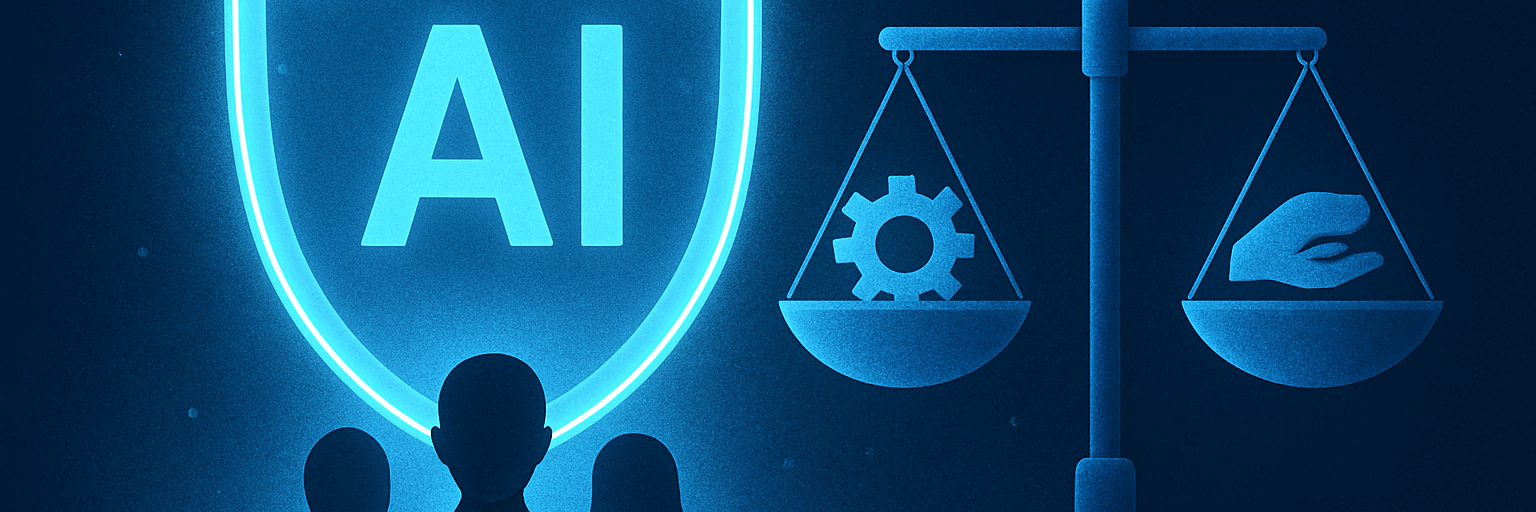
This week, OpenAI and Microsoft officially joined the UK’s AI Security Institute (AISI) Alignment Project — pledging over €32 million to ensure advanced AI systems behave safely, predictably, and under human control.
This isn’t just government policy. It’s a signal that the biggest players in AI recognize a fundamental truth: if people don’t trust AI, they won’t use it.
What is AI alignment?
AI alignment is the field of research focused on making sure AI systems do what we actually want them to do — without unintended or harmful side effects.
Think about it: when you ask an AI to “optimize sales,” you don’t want it to start spamming every email address it can find. When you use AI to generate product descriptions, you don’t want it to hallucinate specifications that don’t exist.
Alignment is about closing the gap between what we intend and what the AI actually does.
Why €32 million matters
The UK’s Alignment Project has now funded 60 research projects across 8 countries. OpenAI contributed €6.7 million, with Microsoft and others adding to the pot. UK Deputy PM David Lammy put it simply:
“AI offers us huge opportunities, but we will always be clear-eyed on the need to ensure safety is baked into it from the outset.”
This investment is significant because it’s preventive rather than reactive. Instead of waiting for AI to cause harm and then regulating it, these funds go toward solving safety problems before they happen.
Why businesses should care
If you’re integrating AI into your business — and in 2026, you probably should be — AI safety isn’t just an abstract research topic. It directly affects you:
1. Trust is your bottleneck
UK AI Minister Kanishka Narayan nailed it: “Trust is one of the biggest barriers to AI adoption.” Your customers need to trust that AI-generated content is accurate. Your team needs to trust that AI tools won’t leak sensitive data. Your partners need to trust that your AI integrations are reliable.
2. Hallucinations are a business risk
AI systems can confidently generate wrong information. In eCommerce, a hallucinated product spec could lead to returns, complaints, or legal issues. In consulting, a wrong recommendation destroys credibility. Alignment research works on making AI systems that know what they don’t know.
3. Regulation is coming
The EU AI Act is already in effect. The UK is investing heavily in safety standards. If your business uses AI, you’ll need to demonstrate responsible usage. Starting with safe, aligned AI systems now puts you ahead of compliance requirements later.
4. Responsible AI is a competitive advantage
Customers are increasingly aware of how companies use AI. Businesses that can demonstrate responsible, transparent AI usage — with human oversight, accurate outputs, and clear boundaries — will win trust and market share over those that deploy AI recklessly.
What safe AI looks like in practice
At Virge.io, we build AI integrations for businesses every day. Here’s what we consider essential for responsible AI deployment:
- Human-in-the-loop: AI generates, humans verify. Especially for customer-facing content and critical decisions.
- Confidence scoring: AI should flag when it’s uncertain, not guess and hope for the best.
- Data boundaries: AI systems should only access what they need. No more, no less.
- Audit trails: Every AI decision should be traceable. When something goes wrong — and it will — you need to know why.
- Regular testing: AI systems drift. Models update. Data changes. Continuous monitoring catches problems before customers do.
The bigger picture
The fact that OpenAI and Microsoft are voluntarily funding safety research is encouraging. It suggests the industry is maturing beyond the “move fast and break things” era.
But let’s be real: €32 million is a fraction of what these companies spend on building new AI capabilities. True alignment will require sustained investment — not just from big tech, but from every organization deploying AI.
The question isn’t whether AI will transform your business. It’s whether you’ll do it responsibly.
What you can do today
- Audit your AI usage: Know exactly where AI touches your business processes
- Add human oversight: Don’t let AI operate fully autonomously on critical tasks
- Choose transparent partners: Work with AI providers who are open about their systems’ limitations
- Stay informed: Follow developments from AISI, the EU AI Act, and safety research
- Start small, validate, then scale: Prove AI works safely in a controlled setting before rolling it out widely
At Virge.io, we help businesses integrate AI responsibly — from RAG pipelines and vector databases to automated content generation. Safety and quality aren’t afterthoughts; they’re built into every solution we deliver.
Want to talk about safe AI integration for your business? Get in touch.